


Designing Inclusive Playgrounds for Children with Autism

Updated: Apr 15

Autism Awareness Month is an important reminder of both the challenges individuals on the autism spectrum face and the opportunities we all have to create a more inclusive world. With thousands of new diagnoses each year, the need for thoughtful, inclusive environments, especially for children, is more important than ever.
Playgrounds should be places where every child feels welcome, safe, and free to explore. Yet for many children with autism, traditional play spaces can feel overwhelming, isolating, or even distressing. The good news? With intentional design, we can change that.
Why Inclusive Playground Design Matters
Children on the autism spectrum experience the world differently. Some are non-verbal, while others communicate easily. Many face challenges with social interaction, and sensory sensitivities can make busy, noisy playgrounds difficult to navigate.
Inclusive playground design isn’t just about accessibility, it’s about belonging. It ensures that every child, regardless of ability, can engage, interact, and enjoy play without barriers.
Designers, planners, and communities all play a role in making “all-inclusive” the standard—not an afterthought.

Designing for the Senses
A key component of inclusive play is understanding sensory processing. Many children with autism experience differences in how they interpret sensory input, particularly in:
Vestibular sense (balance and movement)
Proprioceptive sense (body awareness)
Play environments that incorporate movement—like swinging, spinning, and rocking—help support these systems and create a more comfortable experience.
At the same time, overstimulation can be a real challenge. Loud noises, bright colors, and chaotic movement can quickly become overwhelming. Thoughtful design helps reduce this “playground stress” and creates spaces where children can regulate and engage at their own pace. The 7 Principles of Inclusive Play
Great inclusive playgrounds are built around seven core principles:
Be Fair – Accessible and equitable for all
Be Inclusive – Designed for a wide range of abilities
Be Simple – Easy to understand and use
Be Independent – Supports autonomy
Be Safe – Minimizes risks and errors
Be Active – Encourages participation without excessive strain
Be Comfortable – Provides appropriate space and support
These principles guide the creation of environments where every child can participate fully and confidently.
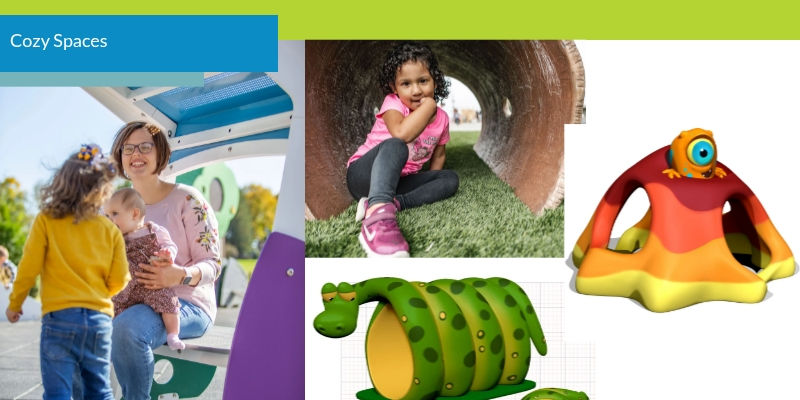
Creating “Cozy Spaces” for Comfort
One often-overlooked element in playground design is the need for quiet, retreat-like areas.
Children with autism may need time to adjust to a new environment. Without a safe place to decompress, they may withdraw, hide, or even wander into unsafe areas.
Incorporating “cozy spaces”—small, semi-enclosed areas away from the main activity—can make a huge difference. These spaces offer children a sense of security and a place to regroup before rejoining play.
Adding features like fencing can also improve safety and provide peace of mind for families.
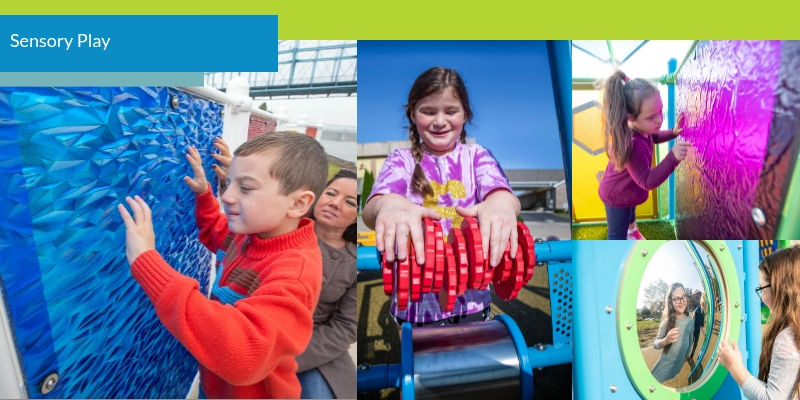
The Power of Sensory Play
Sensory play engages children through touch, sound, sight, and movement. It supports cognitive development, communication, and social interaction.
Elements like:
Textured panels
Musical instruments
Interactive features
Contrasting colors
…help children explore in ways that feel natural and enjoyable.
Sensory Equipment That Supports All Children
Sensory-focused equipment allows children to engage in the playground on their own terms. Features like sensory tunnels, play panels, and interactive components provide opportunities for both independent and social play.
These elements are especially valuable for children who may feel overwhelmed, offering a more controlled and calming way to participate.

Music as a Bridge
Music is especially powerful for children with autism. Many are naturally drawn to sound and rhythm, even if verbal communication is difficult.
Musical play allows for:
Self-expression
Non-verbal communication
Reduced anxiety
Improved social interaction
Well-designed instruments can even encourage cooperative play without requiring direct eye contact, making interaction more comfortable.

Movement-Based Play: A Critical Component
Movement is essential for development and sensory regulation. Inclusive playgrounds should offer a variety of motion-based activities:
Swinging
Supports balance, coordination, and body awareness. Inclusive swing seats with added support allow more children to participate safely.
Spinning
Engages multiple senses while developing motor skills and spatial awareness. Group spinners can also encourage social interaction.
Rocking
Helps build rhythm, coordination, and muscle tone while promoting cooperative play.
Providing a range of movement options ensures that children can find what works best for their unique needs.
Building a More Inclusive Future
Designing for children with autism ultimately benefits all children. Inclusive playgrounds foster empathy, creativity, and connection—creating communities where differences are embraced, not excluded.
By prioritizing sensory-friendly design, accessibility, and thoughtful planning, we can create spaces where every child has the opportunity to play, grow, and belong.


Comments