


The 5 Fundamentals of Inclusive Design
These five fundamentals provide a framework for creating play environments where children of all abilities can play together, explore and grow. Each element contributes to a more inclusive, engaging and enriching play experience.


Incorporate a variety of sensory elements to engage different learning styles and needs.
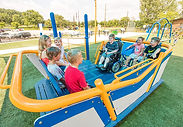

Design welcoming spaces where children of all abilities can play side by side.


Remove physical barriers and provide multiple ways to access and experience play.


Offer a balance of active and quiet play opportunities to support different sensory needs.


Design spaces that foster interaction, cooperation and a sense of belonging for everyone.

Sensory Play: Engaging the Whole Child
Thoughtful, sensory-rich play supports different ways children experience, process and respond to their environment. By incorporating a variety of sensory elements, playgrounds can engage the whole child and create play experiences that are more inclusive and meaningful.
Movement

Vestibular
Supports balance, motion and spatial awareness.

Proprioceptive
Builds body awareness and helps children understand where their body is in space.
Perception

Visual
Engages sight and helps children take in and make sense of their surroundings.

Auditory
Stimulates hearing and supports attention, communication and learning.
Exploration

Tactile
Involves touch and helps children explore textures, shapes and materials.

Olfactory
Introduces scent and adds another layer of discovery and engagement.


